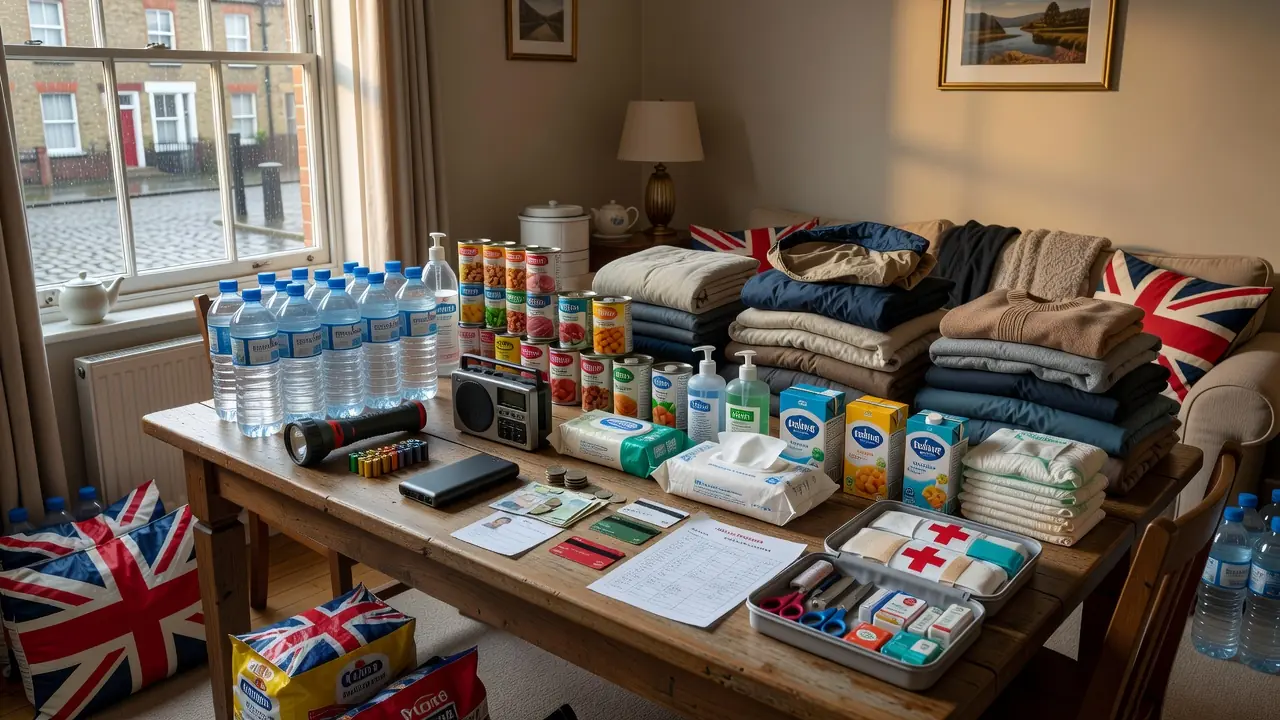
The British government has updated its "Be Ready" guidance, asking households to keep nine categories of basic supplies on hand to manage for three days during an emergency. The list runs from bottled water and tinned food to pet supplies, and it is aimed at everyday disruptions as much as large-scale crises.
What the guidance asks households to keep
The advice centres on a three-day window. Officials suggest three litres of bottled water per person per day for drinking, with additional water needed for cooking and washing. Households are also asked to keep non-perishable food such as tinned meat, fish or vegetables, along with dried fruit and nuts.
Beyond food and water, the list covers hygiene products such as hand sanitiser and wet wipes, and a torch with spare batteries. It recommends blankets, sleeping bags and warm clothing, plus a battery or wind-up radio and a charged power bank. Households should hold a mix of cash in coins and notes, bank cards, copies of identification, and a written list of important phone numbers.
Health-related items include a first aid kit and essential medication. Families with babies are advised to keep ready-to-feed formula, nappies and wipes, while pet owners should have plenty of pet food and bottled water for their animals.
Why the government is framing it this way
Defence Secretary Wes Streeting, speaking about the campaign, pointed to disruptions that could affect daily life, asking how the country would cope if supermarket payment systems failed. Security Minister Dan Jarvis linked the advice to severe storms and other everyday emergencies. In his account, households that prepare themselves can reduce pressure on emergency services, which can then focus on people who need more support.
The reasoning is practical rather than alarmist. Many of the listed items are ordinary household goods, and the guidance treats preparation as a shared responsibility. The three-day figure is a planning benchmark chosen to cover short interruptions to supply, power, or transport, not a prediction of a specific event.
Practical implications and limits
For most households, the easiest starting point is an audit of what is already in the cupboard. Rotating tinned goods into regular meals, checking batteries and medication expiry dates, and keeping a written contact list are low-cost steps. Cash held at home is also worth reviewing, since card and payment systems are the very disruption the ministers cited.
The guidance has limits. It does not set specific quantities for every household, and it does not account for individual medical needs, which should be discussed with a doctor or pharmacist. Advice on pet food and animal care should likewise come from a veterinarian for specific animals. The source material describes the recommendations but does not provide product brands, prices or detailed clinical or veterinary instructions, so readers should consult official government sources for full detail.